
THE premium meat with an incomparable aroma

At the latest when tasting this fine meat, it becomes clear that Dry Aged Beef is not a mass-market product. Unlike mass-produced meat, which relies on rapid growth and quick aging, Dry Aged Beef needs time throughout the entire process, from pasture to the finished steak on the plate. The animals grow naturally and healthily, resulting in finely marbled meat. During the post-aging phase, the distinctive aroma begins to fully develop through the activity of enzymes in the meat. Due to its composition of water, proteins, and fat, meat is naturally rather neutral in flavor. Through the dry-aging of “Dry Aged Beef,” chemical processes create flavor compounds: As water is lost, the proteins and fats contained in the meat are broken down. During this process, lactic acid, fatty acids, salts, and above all monosodium glutamate are formed, which acts as a flavor enhancer. This complex flavor develops during the first three to six weeks of dry aging.
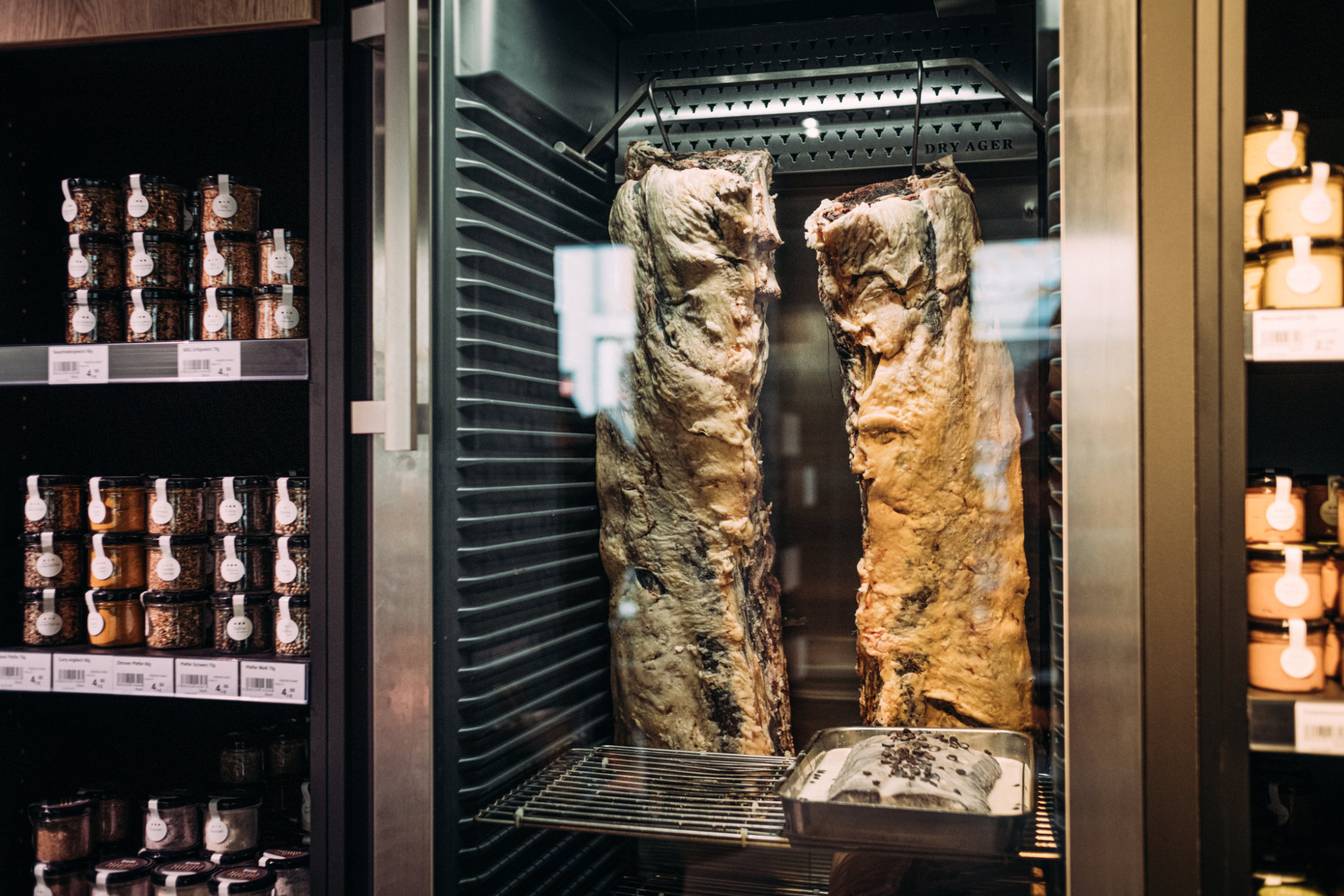
Traditional aging process
Steak lovers are likely familiar with this type of meat, which practically melts on the tongue. “Dry Aged Beef” relies on natural methods and needs nothing more than salt and heat to develop its full flavor. It impresses with an intense aroma, often described as nutty, smoky, and savory, and is considered by connoisseurs to be one of the finest steak varieties. Special dry-aging refrigerators with minimal airflow, along with extensive experience, are required to ultimately enjoy the meat with its intensified flavors.
Proper preparation
Several hours before cooking, the steak is removed from refrigeration so it can come to room temperature. The cuts are at least 3–5 centimeters thick. After salting the meat, it is seared briefly over high heat to develop roasted flavors, then finished in the oven. Finally, it is refined in the pan with foaming butter, thyme or rosemary, and a crushed clove of garlic. Before serving, it should rest for a while.